Who Should Not Get Microneedling on Their Face?
You have done your research. You like what you see. Microneedling sounds like exactly what your skin needs. And then a small voice in the back of your mind asks: but is it actually right for me?
That is a smart question. And this post gives you a real answer, not a generic disclaimer list.
Microneedling is one of the most versatile and effective non-surgical skin treatments available. At Glow Med Clinic in Aurora, it is one of our most requested services, and for good reason. But it is not right for everyone, and some people need to wait rather than proceed immediately. Understanding the difference between a contraindication and a temporary pause is what this guide is actually about.
First, Who Is Microneedling For?
Before covering who should not have it, it is worth being clear about how broad the candidate pool actually is.
Microneedling in Aurora at Glow Med Clinic treats a wide range of skin concerns including acne scarring, fine lines, enlarged pores, uneven skin texture, hyperpigmentation and thinning eyebrows. It works on all skin tones, including darker complexions that are not always safe for laser-based alternatives. Most healthy adults with no active skin conditions are suitable candidates.
The contraindications below are real and important. But the majority of them are temporary. Most people reading this post will either be fine to proceed now or will need to wait a short period and then revisit.
Who Should Not Get Microneedling? The Complete List Explained
What the original version of this blog got wrong was treating contraindications as a list. They are not a list. They are clinical situations that each need a proper explanation, because understanding why something is a contraindication is what helps you make an informed decision about your own skin.
Active Acne or Inflamed Breakouts
This is the most common reason our Aurora clients are asked to wait before their first microneedling session. If you have active, inflamed acne, particularly cystic or pustular breakouts, microneedling is not appropriate at that time.
Here is why. The device creates thousands of microscopic channels in the skin. When active bacteria from inflamed acne are present, those channels can carry bacteria deeper into the skin and spread it across areas that were previously clear. The result is more breakouts, more inflammation and a higher risk of post-inflammatory hyperpigmentation, the dark marks that acne leaves behind.
What this does not mean is that acne scars rule you out. It is the active, inflamed breakouts that are the issue, not scarring. Once your skin is clear, microneedling is actually one of the most effective treatments available for the scarring that acne leaves behind. Most clients at our clinic who struggled with acne-related scarring see significant improvement over a course of sessions.
The wait is typically two to four weeks from when your skin is fully clear of active breakouts. Worth it.
Cold Sores and Herpes Simplex
This one is frequently overlooked by clients who do not think to mention it. If you have ever had a cold sore, even once, years ago, please disclose this before your microneedling session.
Microneedling creates micro-injuries in the skin. Skin injury is one of the known triggers for herpes simplex reactivation. This means that even if you have not had a cold sore in years, microneedling can bring one on in the treated area.
The good news is that this does not disqualify you from treatment. It simply means that your GP should prescribe a short course of antiviral medication to take before and after your session as a preventative measure. With that precaution in place, microneedling can proceed safely.
Pregnancy and Breastfeeding
Microneedling is not recommended during pregnancy or while breastfeeding. There is no evidence that it is directly harmful, but there is also insufficient safety data to confirm it is not. During pregnancy, the body’s hormonal environment changes significantly, and the risk of unwanted pigmentation changes following any skin injury is higher.
During breastfeeding, the same cautious approach applies. The changes in skin sensitivity and healing response during this period make microneedling an unnecessary risk when there is no urgency.
Once pregnancy has ended and breastfeeding is complete, microneedling can be reconsidered. Most clients in this situation book a consultation to discuss timing and goals when they are ready.
Blood-Thinning Medications
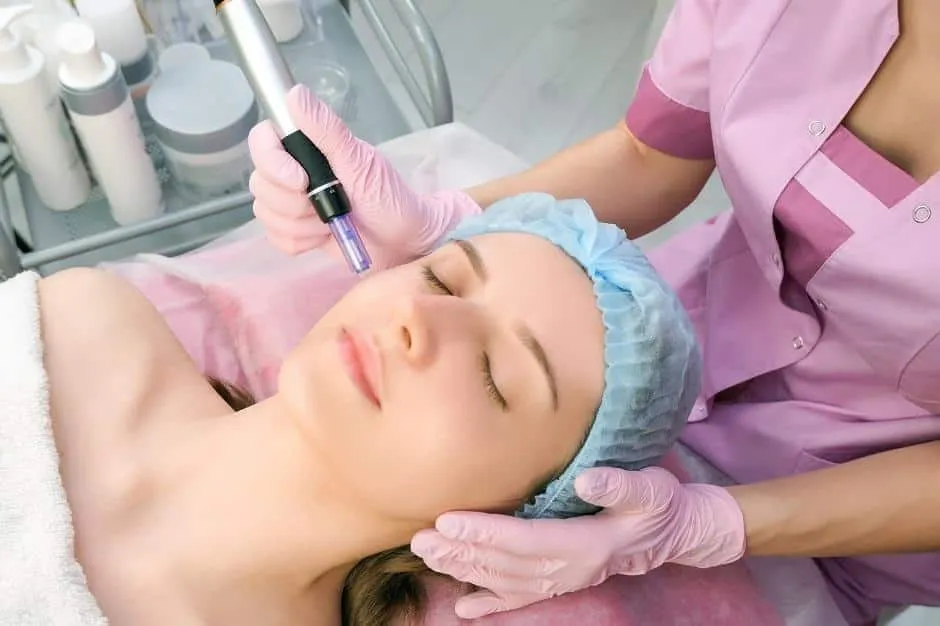
Microneedling creates controlled micro-injuries in the skin, which involve minor bleeding at the needle entry points. If you are taking anticoagulant medications such as warfarin, certain blood pressure medications, or even high-dose supplements like fish oil, vitamin E or aspirin, your clotting ability is reduced. This can increase bleeding during the procedure and slow the healing process afterwards.
Do not stop a prescribed blood-thinning medication without speaking to your doctor. What you should do is mention the medication at your consultation at Glow Med Clinic. In some cases, we can discuss the level of risk with you and proceed with adjusted technique. In others, it is safer to wait.
Active Skin Infections, Warts or Open Wounds
Any active infection on the skin in the treatment area is a firm contraindication. This includes bacterial infections, fungal infections, impetigo and viral warts. Microneedling over an active infection can spread it, worsen it and introduce pathogens deeper into the skin tissue.
The same applies to open wounds or any area of compromised skin integrity. The treatment area needs to be intact and healthy before treatment begins.
Once the infection is fully resolved and cleared by a doctor, microneedling can be scheduled.
Keloid Scarring History
If you have ever formed a keloid scar, which is an overgrown scar that extends beyond the boundaries of the original wound, this is important to disclose before microneedling. Keloid formation is a genetic skin response to injury, and because microneedling creates controlled injuries, it carries a risk of triggering new keloid formation in susceptible individuals.
This is different from hypertrophic scarring, which stays within the wound boundaries and often flattens over time. Knowing your scar history helps us assess whether microneedling is appropriate for you or whether an alternative approach would serve your skin better.
Active Eczema or Psoriasis in the Treatment Area
If you have eczema or psoriasis on your face, microneedling over the affected area is not appropriate while it is active. Psoriasis is particularly relevant because of the Koebner phenomenon, a well-documented response where psoriasis lesions can appear at sites of skin injury or trauma in people who have the condition. Microneedling is exactly the type of controlled skin trauma that can trigger this.
Eczema on other areas of your body does not affect your suitability for facial microneedling. Only the treatment area matters. When the condition is in full remission in that area, treatment can be reconsidered.
Lupus and Autoimmune Conditions
Lupus and certain other autoimmune conditions can affect the skin’s ability to heal predictably following any kind of injury. In some autoimmune conditions, the inflammatory response that microneedling deliberately triggers can be unpredictable or exaggerated.
This does not mean anyone with an autoimmune condition is automatically excluded. It means that medical clearance from your rheumatologist or specialist is needed before proceeding, and we need to understand which medications you are on, as some immunosuppressants can also affect wound healing.
Recent Radiotherapy or Chemotherapy
If you are currently undergoing chemotherapy or radiotherapy, or have recently completed a course, your skin and immune function are likely compromised. The risk of infection following microneedling is elevated, and the skin’s healing capacity may be reduced.
A general guideline is to wait at least six months after completing treatment and to obtain clearance from your oncologist before proceeding. Skin that has been directly in a radiation field should not be treated with microneedling.
Uncontrolled Diabetes
Diabetes affects wound healing. When blood sugar is poorly controlled, the body’s ability to heal micro-injuries is impaired and the risk of infection is increased. Uncontrolled diabetes is therefore a contraindication for microneedling.
Well-controlled diabetes, however, is a different situation. Many of our clients at Glow Med Clinic in Aurora manage their diabetes effectively and are suitable candidates for microneedling with appropriate precautions. The key factor is whether your blood sugar is stable and well-managed. If you have diabetes, bring this up at your consultation and we will discuss what is appropriate for your specific situation.
Recent Botox or Dermal Fillers
This one surprises clients who have had recent injectable treatments and are now enquiring about microneedling. If you have had dermal fillers and Botox in Aurora or elsewhere recently, timing matters.
For Botox and wrinkle relaxers, a minimum of two weeks before microneedling is recommended. For hyaluronic acid dermal fillers, four weeks minimum. The reason is that microneedling can potentially displace freshly placed filler or interfere with the distribution of a neuromodulator before it has fully settled.
If you are planning both treatments, the safest sequence is to complete your injectable appointment first, allow the appropriate settling time, and then schedule your microneedling session.
What If You Are Unsure?
This is the most important section of this post.
Many people who search this topic are not clearly in or out. They are somewhere in between. Maybe their acne is mostly clear but not completely. Maybe they are on a low-dose medication and are not sure if it counts. Maybe they had fillers six weeks ago and cannot remember if that is enough time.
The answer in every one of those situations is the same: come in for a consultation before booking a treatment.
At Glow Med Clinic in Aurora, your free consultation exists precisely for this purpose. Our nurse team will review your skin, your medical history and anything you are uncertain about and give you a direct, clinical answer. We will tell you honestly whether now is the right time, whether a short wait makes sense, or whether a different treatment would serve your skin better at this stage.
We would rather spend thirty minutes in a consultation giving you the right advice than book a treatment that is not appropriate. That is what clinical practice looks like.
What About Microneedling for Eyebrows?
One of the most popular reasons people explore microneedling at our Aurora clinic is microneedling for eyebrow growth, a treatment that stimulates dormant hair follicles to encourage natural brow regrowth.
The same contraindications apply to brow microneedling as to facial microneedling. Active skin conditions in the brow area, recent cosmetic procedures, pregnancy, blood thinners and the other factors above all apply to the eyebrow treatment zone equally.
If you have been researching eyebrow microneedling and have any of the conditions mentioned in this post, bring that to your consultation. It is not automatically a no. It may simply be a matter of timing or a precautionary step that makes your treatment safer and more effective.
Frequently Asked Questions
Can I get microneedling if I have acne scars but also have active acne?
Not at the same time. Active, inflamed acne needs to be fully clear before microneedling can proceed. The good news is that once your skin clears, microneedling is one of the most effective available treatments for the scarring that acne leaves behind. Your nurse at Glow Med Clinic will assess your skin at your consultation and let you know exactly what timeline makes sense.
I had a cold sore once years ago. Can I still have microneedling?
Yes, but this needs to be disclosed before your appointment. Your GP should prescribe a short course of antiviral medication to take preventatively around the time of your treatment. With that precaution in place, microneedling can be performed safely. Please do not skip disclosing this because it feels too minor to mention.
How long should I wait after fillers before getting microneedling?
At least four weeks after hyaluronic acid dermal fillers. At least two weeks after Botox or a wrinkle relaxer. If in doubt, mention the exact product and date at your consultation and we will advise accordingly.
I have well-controlled type 2 diabetes. Am I able to have microneedling?
Possibly yes. Well-controlled diabetes with stable blood sugar is a different situation from uncontrolled diabetes. Bring this up at your consultation at Glow Med Clinic and we will discuss the specific precautions and whether your situation makes you a suitable candidate.
Ready to Find Out If Microneedling Is Right for You?
The best way to know for certain is not a blog post. It is a conversation with someone who can actually look at your skin.
At Glow Med Clinic in Aurora, your first consultation is free. Our nurse team will assess your skin and your medical history, answer every question you have and give you a clear, honest recommendation. If now is the right time, we will tell you. If a short wait would make the outcome better or safer, we will tell you that too.
Book a free microneedling consultation at Glow Med Clinic and take the guesswork out of it.
We are at 114-35 Sunday Drive, Aurora, Ontario, a short drive from Richmond Hill, Vaughan and Newmarket.
Call (905) 713-0980 or email info@glowmedclinic.com