At some point in your research, you have probably landed on both of these names. Morpheus8. Ultherapy. Two of the most talked-about non-surgical skin tightening treatments available, both promising firmer, more lifted skin without going anywhere near a surgeon’s scalpel. And now you are trying to figure out which one is actually right for you, and whether the differences between them genuinely matter or if it is just marketing noise.
They matter. These two treatments work through completely different technologies, and that difference shapes everything from what they can treat, to how they feel, to what kind of result you can realistically expect. This guide breaks down the real comparison, not the surface-level version, so you can make an informed decision rather than a coin flip.
The Core Difference: How Each Technology Actually Works
This is where the real distinction lives, and understanding it makes every other difference between the two treatments make sense.
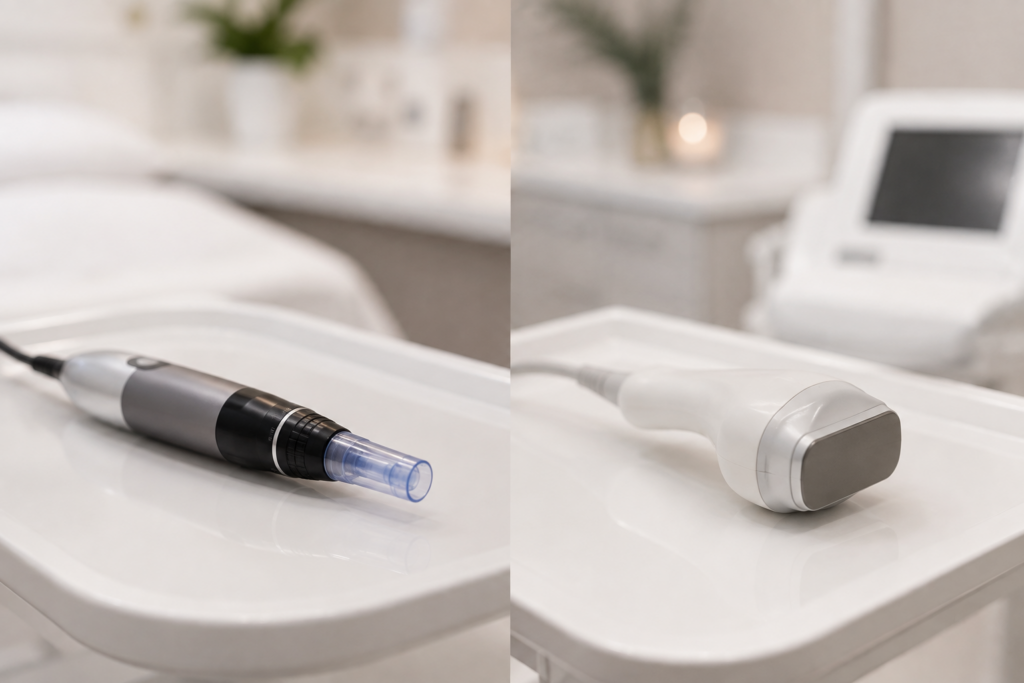
Morpheus8 uses radiofrequency energy delivered through a matrix of ultrafine microneedles. The needles penetrate the skin to a precisely controlled depth, anywhere from 1mm at the surface to 8mm in deeper tissue, while RF energy is delivered directly into the dermis and, depending on the treatment area, the underlying fat layer. This dual action does two things simultaneously: the needle channels stimulate a wound-healing response that builds new collagen, while the RF heat causes existing collagen fibres to contract immediately and stimulates fibroblasts for longer-term collagen production.
Ultherapy uses focused ultrasound energy, delivered without any needles at all. The ultrasound energy is directed at a specific depth beneath the skin, typically targeting the same structural layer addressed in a surgical facelift, and creates small, controlled points of thermal injury at that depth. This triggers the body’s natural healing response, gradually producing new collagen over the following months without ever breaking the skin’s surface.
In simple terms: Morpheus8 combines mechanical micro-injury with heat. Ultherapy uses heat alone, delivered without penetrating the skin. Both stimulate collagen. They just get there through fundamentally different mechanisms.
Depth and What That Means for Results
Both treatments work at meaningful depth, but the way they get there and what that means for your results is different.
Morpheus8 depth is adjustable and precisely controlled, ranging from very superficial settings for texture and pore concerns to significantly deeper settings, up to 8mm, for addressing fat remodelling and deeper laxity. This adjustability is one of Morpheus8’s biggest practical advantages, since a single device can be calibrated differently depending on whether you are treating fine lines, jowling, or body skin laxity.
Ultherapy targets a specific, consistent depth, generally between 4.5mm and 8mm depending on the ultrasound transducer used, corresponding to the same tissue layer manipulated in a surgical facelift. This makes Ultherapy particularly well suited to lifting, especially around the brow and jawline, since it is working at the structural layer responsible for that lifting effect.
Pain and What the Treatment Actually Feels Like
This is one of the most practical differences between the two, and it is worth being honest about upfront.
Morpheus8, performed with a topical numbing cream applied 30 to 40 minutes before treatment, is generally well tolerated. Most clients describe the sensation as warmth and pressure, rating the experience four to six out of ten at most, with the numbing cream managing the majority of the discomfort.
Ultherapy has a reputation for being more uncomfortable, and this reputation is largely accurate. Because the ultrasound energy needs to reach deeper structural tissue, many clients describe brief moments of intense heat or a stinging sensation as the device passes over bony areas like the jaw or brow bone. Some clinics offer oral pain medication or a nerve block for sensitive clients, but even with these measures, Ultherapy is generally considered a more uncomfortable experience than Morpheus8.
If treatment tolerance is a significant factor in your decision, this is worth weighing seriously, particularly if you have a lower pain threshold or are treating a larger area in one session.
Downtime: A Real Point of Difference
Morpheus8 involves visible downtime. Immediately after treatment, skin appears red with small pinpoint marks from the needle entry points, and this typically resolves over two to five days depending on the intensity of the treatment. Most clients plan around a few days of visible redness before returning to normal social or work activities without any concern.
Ultherapy involves essentially no visible downtime. Since the skin surface is never broken, there is no redness, no pinpoint marking, and clients can generally return to their normal routine and appearance immediately after treatment. Some mild swelling, tenderness or, rarely, temporary numbness can occur, but nothing that typically requires planning time away from your usual activities.
If you need to look presentable immediately after treatment, for example the day before an event, this is a genuine point in Ultherapy’s favour.
What Each Treatment Can Actually Address
Morpheus8 treats a broader range of concerns. Beyond skin tightening, it addresses acne scarring, enlarged pores, uneven texture, and can be used on the body as well as the face, targeting areas like the abdomen, thighs and upper arms for skin laxity following pregnancy or significant weight loss. This versatility is one of Morpheus8’s most significant practical advantages.
Ultherapy is more narrowly focused on lifting and tightening, primarily on the face and neck. It does not address acne scarring, texture or pore size the way Morpheus8 does, and it is not typically used on the body. What it does, it does specifically: lifting the brow, jawline and neck through deep structural tissue tightening.
If your primary concern is purely lifting, particularly around the brow or jawline, Ultherapy’s targeted mechanism is built specifically for that. If your concerns span multiple issues, laxity, texture, scarring, or you want a treatment that can also address body areas, Morpheus8’s versatility becomes the more practical choice.
Skin Tone Safety: An Important Consideration
This is a genuinely important difference for many of our clients across York Region.
Both Morpheus8 and Ultherapy are considered safe across the Fitzpatrick skin tone scale, since neither relies on light-based energy that interacts with melanin the way laser treatments do. This is a meaningful advantage both treatments share over laser-based skin tightening alternatives, and it is one of the reasons both are viable options for clients with deeper skin tones, including South Asian, Middle Eastern, East Asian, African and Caribbean clients.
Neither treatment carries the elevated pigmentation risk associated with light and laser-based energy, which is worth knowing if you have previously been told certain cosmetic treatments were not suitable for your skin tone.
Sessions Needed and How Results Build
Morpheus8 typically requires one to three sessions, depending on the severity of the concern being treated, spaced six to eight weeks apart. For a deeper look at exactly how many sessions your specific concern might need, our guide on how many Morpheus8 sessions you need breaks this down by concern type.
Ultherapy is typically recommended as one to two sessions, sometimes performed as a single comprehensive treatment with an annual or biannual touch-up depending on individual response and the natural ageing process continuing afterward.
Both treatments develop their results gradually over three to six months as the collagen remodelling process matures, which means neither is a same-day transformation. Patience is required with either option.
How Long Do Results Last?
Results from both treatments generally last a similar duration, broadly in the range of one to three years, depending on individual factors like age, skin quality, lifestyle and sun exposure. Neither treatment stops the natural ageing process entirely, which is why many clients from either camp choose an occasional maintenance session to sustain their results over time.
Which One Should You Actually Choose?
Here is the honest, practical answer rather than a marketing-driven one.
Choose Morpheus8 if: you want a versatile treatment that can address multiple concerns beyond tightening, including texture, scarring or pore size; you are interested in treating body areas as well as the face; you want a more tolerable treatment experience with a shorter, more manageable downtime window; or you are dealing with moderate to significant skin laxity that would benefit from adjustable treatment depth.
Choose Ultherapy if: your primary concern is specifically lifting, particularly around the brow or jawline; you cannot accommodate any visible downtime, even for a few days; and you are comfortable with a more intense treatment sensation in exchange for zero recovery time.
Consider that you may not need to choose at all. Some clients pursue both treatments over time, or combine Morpheus8 with other treatments like PRP or injectables as part of a broader rejuvenation plan, since the treatments work through different mechanisms and are not mutually exclusive.
An Honest Note From Our Aurora Clinic
At Glow Med Clinic, Morpheus8 in Aurora, Ontario is the treatment we most consistently recommend for the majority of clients we see, largely because of its versatility, its manageable treatment experience, and its ability to address both facial and body concerns with adjustable depth. That said, we believe the right choice depends on your specific concern, not on which treatment happens to be available at a given clinic. If your primary goal is a very specific, focused lift and downtime is not a factor for you, Ultherapy may genuinely be worth exploring elsewhere.
We would rather give you an honest recommendation based on your face and your goals than steer you toward whichever treatment we offer.
Frequently Asked Questions
Is Morpheus8 or Ultherapy more painful?
Ultherapy is generally considered more uncomfortable, since the ultrasound energy needs to reach deeper structural tissue and can create brief moments of intense heat, particularly over bony areas like the jaw. Morpheus8, performed with topical numbing cream, is typically rated as more tolerable by most clients.
Which treatment has less downtime, Morpheus8 or Ultherapy?
Ultherapy involves essentially no visible downtime, since the skin surface is never broken. Morpheus8 involves two to five days of visible redness and pinpoint marking from the microneedling component, though this is generally manageable and does not typically require time off work or social activities.
Can Morpheus8 and Ultherapy be used together?
Yes, some clients combine both treatments as part of a broader skin tightening plan, since they work through different mechanisms and are not mutually exclusive. This is worth discussing at a consultation to understand whether combining treatments makes sense for your specific goals.
Which treatment is better for acne scarring, Morpheus8 or Ultherapy?
Morpheus8 is the more appropriate choice for acne scarring, since Ultherapy is designed specifically for lifting and tightening rather than addressing texture or scar tissue. Morpheus8’s microneedling component works directly on remodelling scarred tissue in a way Ultherapy’s mechanism does not.
Is one treatment safer than the other for darker skin tones?
Both Morpheus8 and Ultherapy are considered safe across the full Fitzpatrick skin tone scale, since neither relies on light-based energy that interacts with melanin. This makes both genuinely viable options for clients with deeper skin tones who may have been told other cosmetic treatments were not suitable for their skin.
Find Out Which Treatment Is Right for Your Skin
The most reliable way to know whether Morpheus8 or another approach is right for your specific concern is a proper assessment, not a generic comparison. At your free consultation at Glow Med Clinic in Aurora, our nurse team will examine your skin honestly and recommend the treatment most likely to achieve your specific goals.
Learn more about the treatment we recommend most often in our complete guide to Morpheus8 in Aurora, Ontario, see real Morpheus8 before and after results, or book a free consultation to discuss your options.
We are located at 114-35 Sunday Drive, Aurora, Ontario, serving clients across York Region including Richmond Hill, Vaughan and Newmarket.